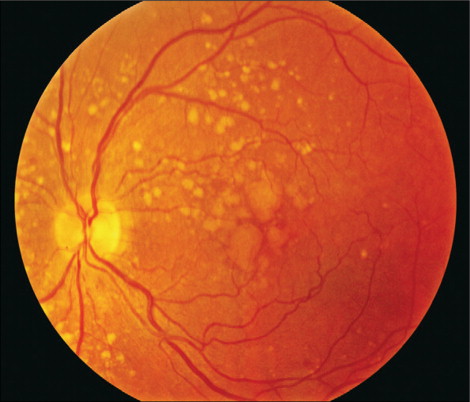
Macular Edema
Macular edema is the build-up of fluid in the macula, an area in the center of the retina. The retina is the light-sensitive tissue at the back of the eye and the macula is the part of the retina responsible for sharp, straight-ahead vision. Fluid buildup causes the macula to swell and thicken, which distorts vision.
Macular edema occurs when there is abnormal leakage and accumulation of fluid in the macula from damaged blood vessels in the nearby retina. A common cause of macular edema is diabetic retinopathy, a disease that can happen to people with diabetes. Macular edema can also occur after eye surgery, in association with age-related macular degeneration, or as a consequence of inflammatory diseases that affect the eye. Any disease that damages blood vessels in the retina can cause macular edema.
The primary symptom of macular edema is blurry or wavy vision near or in the center of your field of vision. Colors might also appear washed out or faded. Most people with macular edema will have symptoms that range from slightly blurry vision to noticeable vision loss. If only one eye is affected, you may not notice your vision is blurry until the condition is well-advanced.